Taking Down Words editors
The Taking Down Words editorial team maintains this independent reference against named primary sources.
Editorial standards
- No paid placements. We do not accept payment for a placement, a ranking or a favourable review. Where a link earns a commission, the page carrying it says so.
- No untested claims. We do not say we have tried something we have not. Prices and plan details supplied by a provider are labelled as indicative rather than presented as our own findings.
- No page for the sake of a keyword. A destination gets a page when there is something specific to say about it. That is why the site is small.
- Corrections are made in public. A factual fix is applied to the page and the update date changes with it.
31 pages by Taking Down Words editors
-
 Writing Drafts A Process Hub for Structuring Evidence Based Prose
A process hub for drafting nonfiction prose that separates generative writing from evaluative editing, routing you to the specific guide that answers your immediate drafting question.
-
 How to Start Writing Move from Purpose and Reader to a Provisional Claim
Move from a blank page to a testable provisional claim by identifying your reader, stating your purpose, and formulating a starting hypothesis you can check against evidence.
-
 How to Outline an Article Using Question Evidence and Sequence
Build an article outline that derives its structure from the questions your reader needs answered and the evidence you can supply, not from decorative headings.
-
 What Makes a Strong Paragraph Claim Evidence Development and Transition
A strong nonfiction paragraph integrates claim, evidence, development, and transition, with the given-new contract governing whether the sequence feels coherent to a reader.
-
 How to Write a Clear Introduction That Matches Reader Need and Argument
Write an introduction that supplies what your specific reader needs at the point of entry, managing the headline-body gap rather than ignoring it.
-
 How to Finish a First Draft by Separating Drafting from Editing Decisions
Finish a first draft by treating generative drafting and evaluative editing as separate cognitive acts, with a concrete finish-line defined by argument completeness not prose polish.
-
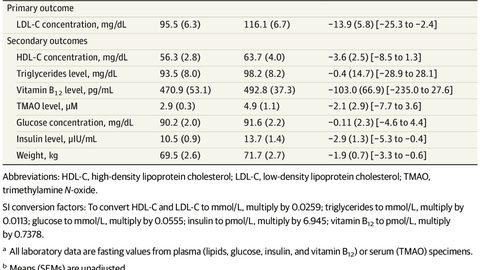 What Is a Primary Source Depends on Your Research Question
A primary source is the thing your research question is about. The same document can be primary for one question and secondary for another.
-
 How to Take Useful Research Notes for Evidence-Based Writing
How to take research notes that keep quotations, paraphrases, and your own ideas separate so every claim stays traceable to its source.
-
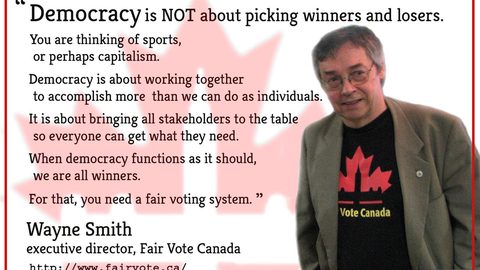 How to Quote a Source Fairly in Nonfiction Writing
How to quote a source fairly by preserving context, accuracy, selection, and attribution so the quoted claim matches the original meaning.
-
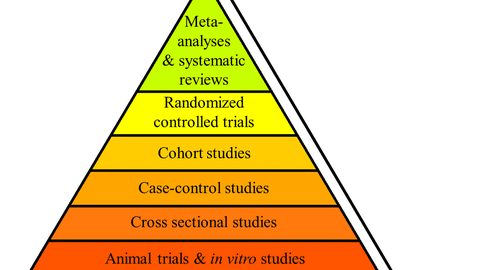 Research and Evidence Hub Prefer Primary Sources and Verification
The Research and Evidence hub routes you by task: prefer primary evidence, show verification steps, and separate source claims from writer conclusions.
-
 Reading Practice Hub for Critical Nonfiction Readers
The reading practice hub routes you to methods for critical analysis, retention, selection, and close attention without moralizing about speed or volume.
-
 How to Evaluate a Source With Authority Evidence Date and Purpose
Evaluate a source by testing its authority, evidence, date, purpose, and corroboration against the specific claim it must support.
-
 How to Fact-Check an Article with a Claim Inventory
How to fact-check an article by building a claim inventory and verifying each assertion against the strongest available primary evidence.
-
 How to Read More Critically by Tracking Claims and Evidence
How to read critically by tracking claims, evidence, assumptions, and omissions so you can see what a text actually requires you to accept.
-
 How to Remember What You Read with Retrieval and Notes
How to remember what you read using retrieval practice, structured notes, and purposeful review instead of passive re-reading.
-
 How to Choose What to Read Next with a Question Led Process
How to choose what to read next by building a question-led selection process that matches texts to the questions you actually want answered.
-
 What Is Close Reading for Nonfiction Argument Analysis
What close reading is, and how its attention to language, form, and pattern applies to nonfiction argument analysis rather than literary texts.
-
 How to Write a Book Review That Balances Description and Analysis
How to write a book review that describes, analyzes, and evaluates a text using the same claim-evidence-warrant discipline as rigorous editing.
-
 How to Pitch an Article: Matching Publication, Angle, and Evidence
How to pitch an article by matching publication, angle, evidence, and proof of fit using claim-evidence-warrant discipline.
-
 Traditional Publishing or Self-Publishing: Comparing Control and Cost
Compare traditional and self-publishing across control, distribution, cost, and work, separating durable principles from platform mechanics.
-
 How to Write About Politics Responsibly: Sourcing and Uncertainty
How to write about politics responsibly by tracing claims, naming uncertainty, avoiding straw-person distance, and planning corrections.
-
 How Should Writers Correct Mistakes? Transparent Corrections and Trust
How to correct published mistakes transparently by naming the original claim, the error, the corrected claim, and the source traceability path.
-
 Editing and Style A Hub for Ordering Editorial Passes on Nonfiction Prose
A hub for ordering editorial passes on nonfiction prose, routing you to the specific guide that answers your editing question and distinguishing style preference from grammar or factual error.
-
 Publishing and Public Argument: A Guide to Durable Principles
The hub for publishing and public argument: route to guides on pitching, publishing paths, political writing, overclaiming, and corrections.
-
 Editing vs Proofreading What Is the Real Difference
Editing changes what a nonfiction text says and how it argues; proofreading fixes errors in what is already decided. Learn the pass order.
-
 How to Edit Your Own Writing With a Cooling Off Period
You cannot edit what you just wrote. Use a cooling-off period and separate passes for structure, claims, sentences, and surface errors.
-
 How to Make Sentences Clearer With Actors and Concrete Nouns
Put a concrete actor in the subject slot, use a verb that names the action, and order information from given to new for clearer sentences.
-
 When to Use Active or Passive Voice in Nonfiction Writing
Active voice names the actor; passive voice names the recipient or action. Choose by purpose and context, not by blanket rule.
-
 How to Cut Unnecessary Words Without Flattening Your Voice
Cut repetition, throat-clearing, and empty modifiers; keep qualifiers that carry evidentiary weight. Concision without flattening voice.
-
 How to Make an Argument Without Overstating It: Claim Strength
How to match claim strength to evidence and name limits so your argument does not overstate what the source traceability supports.
-
 Taking Down Words A Complete Guide to Reading and Writing with Integrity
Taking Down Words is the craft of dismantling and reconstructing language to understand what prose actually says, assumes, and does—not to win arguments but to read and write with integrity.